What's The Reason? Lidar Robot Vacuums Is Everywhere This Year
vacuum robot with lidar on LiDAR Robot Vacuums Researchers have discovered a brand new vulnerability that allows bad actors to monitor homeowners' private conversations via the lidar sensors inside their robot vacuums. LiDAR is an optical laser emitting sensor that detects objects and their relative positions. It improves navigation in robot vacuums by creating real-time maps of the space and assisting them to avoid obstacles with precision. This reduces the risk of collision and improves the efficiency of cleaning. Accuracy There are many ways robot vacuums can navigate through your home as technology advances at a a rapid pace. Mapping technologies such as 3D structured light obstacle avoidance, monocular, and binocular vision are all employed to provide ease of use through algorithms and machine learning. The most advanced method makes use of Lidar (also known as Light Detection Ranging) to map the space, ensuring accuracy and navigation. Lidar is a method of releasing laser beams into the surrounding and measuring the time it takes them to reflect off objects within the room. This information is used to create an accurate map of the cleaning area. The maps that resulted are able to provide precise navigation, making sure that all areas of the space are covered and that there are no obstacles left unavoided. The best lidar vacuums use the mapped environment to create efficient routes, and avoid bumping into obstacles. In our tests, we found the Neato XV11 was able cover nearly all area of the floor, both in large rooms and small ones with just some instances of bumping into objects. This was mostly due to the accurate mapping and the ability to create the “No-Go” zone that stopped it from entering areas where we did not want it. Based on your budget and the complexity of your space depending on your budget and the complexity of your space, it might be worthwhile to choose an affordable robot that makes use of gyroscopes or binocular vision to navigate instead of a model with lidar. If you're willing pay more for better navigation a lidar robot can ensure that your home is maintained thoroughly. The following are some of the most effective ways to improve your own effectiveness: Lidar sensors enable robots to map and navigate around spaces precisely, reducing the risk of collisions and making sure that all areas are kept clean. This is especially important for stairs, rugs that are high-pile and other obstacles that can be missed by traditional navigation technologies such as infrared sensors. When paired with other mapping technologies such as laser sensors and cameras lidar can provide a more complete picture of the space and helps the robot understand the space's layout so that it can plan its route ahead of time. This leads to more efficient and efficient cleaning, with less 'babysitting' from you. The accuracy of robots with lidar means that you can create virtual boundaries within an app to inform your robot where it is prohibited and which areas it is recommended to stay away from. This will limit the chance that your robot could accidentally strike things such as wires or cables, and prevent unnecessary damage to your furniture and electronics. Lidar-enabled robots can be good in detecting larger obstacles, like a pair of socks, but they may be unable to detect smaller objects, such as cables, cords, or wires. This is an area where we recommend you look for a vacuum that has gyroscopes for navigation as these can help compensate for this shortcoming by using the speedy rotation of a spinning wheel or beam of light to determine the distance to obstacles in your home. To maximize the performance of your robotic vacuum you must clean the bin on a regular basis and ensure that all tangled cables are tucked into an appropriate drawer prior to every cleaning session. Speed No matter if you reside in a large home or a cramped apartment and have to efficiently navigate is crucial for a clean and easy. Some robots utilize gyroscopes in order to keep from bumping into objects while other models use more advanced navigation technology like SLAM (Simultaneous Localization and Mapping) or Lidar to make a precise map of your space, detect smaller objects that might be missed by other sensors, and eliminate collisions and omissions for more smooth cleaning. The more complicated the layout of your room, the more important it is to have a navigation system that can navigate around furniture effortlessly. Budget models typically rely on the old bump-and-move navigation method, which uses sensors to trigger the robot to move ever so gently around the furniture. This can result in scratches and poor cleaning results for your furniture or floor. If you're willing to invest more on a premium model, you can count on an robovac equipped with lidar technology to not only navigate around your home, but also clean up quicker than other vacs. A clear map of your room will eliminate the learning (and bumping) process that other robovacs undergo, and it allows them to cover a larger area before running out of batteries or needing to go back to their charging station. Additionally some models that employ lidar can set digital keep-out zones within the app to stop them from entering areas where wires, cords or other things could be tangled up. This feature is especially useful to stop your robovac from snagging your shoes or clothes and also save you the hassle of having to untangle all wires and cords after cleaning. 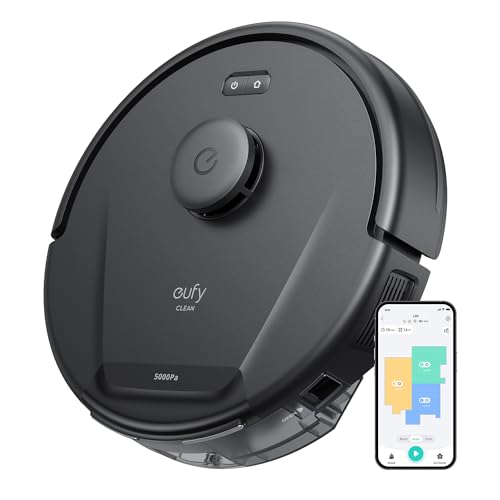 Safety Unlike camera vacuums that may struggle to navigate or see at night, lidar robot vacuums make an outline of your area and adapt to changes in the surroundings. They can also optimize their cleaning path and ensure that every area of your home is cleaned efficiently and thoroughly. This efficiency also helps in better battery management, since there are fewer steps to take per room. Lidar navigation is based on the bounce of laser pulses off objects or surfaces to determine distance. This information is then used to calculate a 3D virtual map of the surrounding, much like a laser range finder. Many factors can interfere with the accuracy and reliability of the mapping system, such as shadows or contrasting colors that can hinder the laser beam's ability to detect surfaces. Manufacturers are working on more advanced mapping and navigation algorithms that incorporate data from the sensors and cameras on robots. They are also working on improving the sensitivity and range of their lidar sensors to recognize smaller and less recessed objects. When selecting a robot vacuum with Lidar mapping and navigation technology, look for furniture-friendly features to avoid damage to your furniture. One example is collision detection and prevention feature that informs the robot to stop if it is near an object that might be damaged or cause damage. There are also models that have edge detection, which helps the robot avoid falling off ledges or steps and possibly causing injury or damaging furniture. Another safety feature to consider is no-go zones. They will help your robot stay away from areas where wires could be found. This will prevent your robot from accidentally chewing down on your laptop's charger or other devices that are commonly located around the house. Efficiency Robot vacuums are powered by the same mapping technology that is used in self-driving planes and vehicles. It makes use of laser beams to bounce off surfaces within the room and return to the sensor. This creates an image of the area. This data allows robots to move more efficiently and to clean different kinds of floors. Lidar is commonly utilized in conjunction with other mapping and navigation technologies. Its accuracy and efficiency make it a very popular option. The system determines the position of furniture, walls and other structures to enable the robot to plan its route efficiently and avoid collisions. It can also cover the entire area. The technology also gives more precise distance measurements than a conventional camera. This technology will allow the robot avoid crashing against furniture or tripping over stairs and other high thresholds. This lets the robot finish its job faster, and conserve battery power because it doesn't need to recharge as frequently. Optic sensors also play an important role in robot navigation. They are typically placed on the wheels of the robot. They measure the number of times the wheels rotate, which allows the device to monitor the robot's progress and determine the time when a fully charged battery is needed. They're especially helpful when you have a large residence or have multiple floors since they permit the robot to accurately track its own movements and keep it from getting lost. Advanced robotic vacuums have a number of additional navigational features like vSLAM or 3D-structured light. This is used for facial recognition on phones, to provide superior obstacles detection and avoidance capabilities. These systems are efficient in both low and strong lighting conditions. It could be the difference between a robot vacuum that hits furniture every time it goes by and one that is able to move in straight, logical lines without hitting anything.